How Programmable Logic Controllers Automate Industrial Processes
Modern manufacturing depends on accurate, consistent, and efficient operations. From packaging and material handling to chemical processing and automotive production, industrial facilities use automated systems to manage repetitive tasks and control machinery. One of the most widely used technologies behind these operations is the programmable logic controller (PLC).
A PLC is an industrial computer designed to monitor equipment, process information, and control machines through programmed instructions. It connects sensors, switches, motors, valves, and other devices to create an automated working environment.
Understanding how programmable logic controllers automate industrial processes helps manufacturers, engineers, and technology professionals evaluate automation systems and identify suitable equipment for different production requirements.
What Is a Programmable Logic Controller?
A programmable logic controller is a digital control device designed to operate industrial machines and processes. It receives information from connected input devices, processes that information using a stored program, and sends commands to output devices.
Unlike ordinary computers, industrial PLC controllers are designed for demanding operating environments. They are commonly used in facilities where equipment must operate consistently despite vibration, electrical interference, temperature changes, and continuous production schedules.
A typical PLC system includes:
Central Processing Unit (CPU): Executes the control program and manages system operations.
Input modules: Receive signals from sensors, switches, and measuring instruments.
Output modules: Send commands to motors, pumps, valves, and indicators.
Power supply: Provides the electrical power required by the controller.
Programming software: Allows engineers to create, test, and modify control logic.
Communication interfaces: Connect the PLC with operator panels and other industrial systems.
These components work together to manage automated manufacturing processes.
How PLC Automation Works in Industrial Processes
PLC automation follows a repeating operating sequence commonly known as the scan cycle. This process allows the controller to monitor equipment and respond to changing conditions.
1. Collecting Input Information
The first stage involves receiving information from connected devices. Sensors monitor conditions such as temperature, pressure, speed, position, and material presence.
For example, a proximity sensor on a conveyor can detect when a product reaches a specific position. The sensor sends a signal to the PLC, allowing the controller to determine the next action.
2. Processing Programmed Instructions
After receiving input signals, the PLC executes its stored control program. The program contains instructions that determine how equipment should operate under different conditions.
Engineers commonly use ladder logic, function block diagrams, and structured text when developing PLC programs.
For example, a program may instruct a conveyor to stop when a product reaches a packaging station or activate a pump when a tank level falls below a defined limit.
3. Controlling Output Devices
Once the PLC evaluates the programmed conditions, it updates its output signals. These signals can start motors, operate valves, activate alarms, or adjust equipment through connected drives.
The controller then repeats the cycle, continuously monitoring the process and updating equipment operations.
Major Applications of Programmable Logic Controllers
Industrial PLC systems are used across different manufacturing and processing environments.
Manufacturing and Assembly Lines
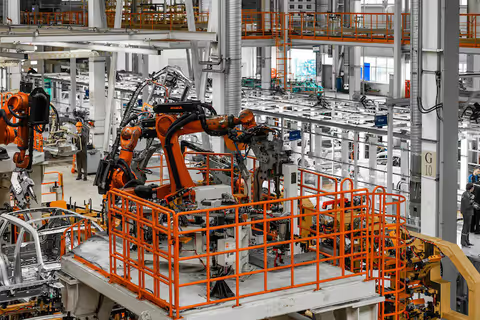
Manufacturing facilities use PLC automation systems to coordinate production equipment, robotic operations, conveyors, and assembly stations.
A PLC can control the sequence of machine operations, monitor product movement, and communicate equipment status. This helps maintain consistent production procedures and reduces dependence on manual switching.
Packaging and Bottling Operations
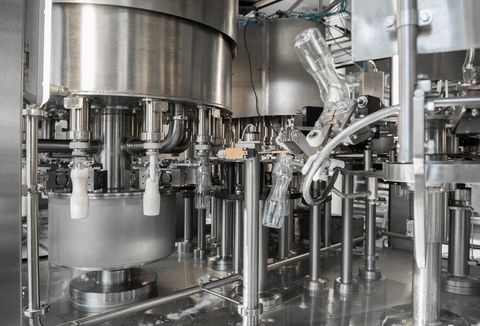
Packaging facilities use programmable controllers to manage filling, sealing, labeling, and sorting equipment.
For example, a PLC can coordinate bottle detection, filling duration, conveyor movement, and packaging sequences. Sensors provide information about product position, while the controller manages connected machinery.
Food and Beverage Processing
Food processing operations involve temperature monitoring, mixing, pumping, filling, and cleaning processes.
PLC control systems can monitor process conditions and operate equipment according to programmed parameters. Their use depends on the production design, equipment requirements, and applicable food safety procedures.
Water Treatment and Chemical Processing
Water treatment plants use PLC controllers to monitor pumps, valves, tank levels, and flow measurements. In chemical facilities, they can coordinate mixing equipment, temperature controls, and material transfer operations.
For complex or highly regulated processes, PLC systems may operate alongside supervisory control and safety systems.
Material Handling and Warehousing
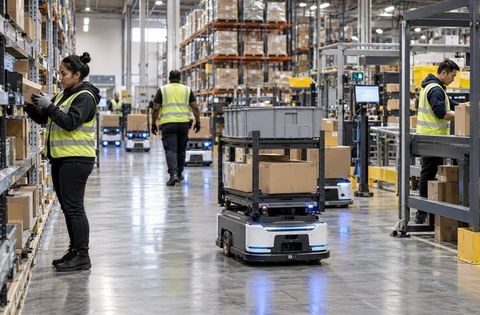
Conveyor systems, sorting machines, automated storage equipment, and lifting systems often use PLC-based control.
The controller coordinates movement between different stations and responds to sensor information. This supports organized material handling across production and distribution facilities.
Types of PLC Systems Used in Industrial Automation
Different industrial applications require different controller configurations.
Compact PLC: Combines essential controller components in one unit. It is commonly used for smaller machines and straightforward automation tasks.
Modular PLC: Uses separate CPU, input, and output modules. It supports expansion when additional equipment or signals are required.
Rack-mounted PLC: Uses a shared rack or backplane to connect multiple modules. It is suitable for larger control applications.
Distributed PLC system: Places input and output equipment closer to different machines or production areas while maintaining communication with the controller.
Safety PLC: Provides specialized functions for designated safety-related applications when designed, configured, and validated according to relevant safety requirements.
The correct type depends on system size, input/output requirements, communication needs, operating conditions, and safety design.
PLC, SCADA, and Industrial Control Systems
PLC and SCADA technologies often work together, but they perform different functions.
A PLC mainly handles direct machine and process control. It receives field signals, executes programmed logic, and operates connected equipment.
SCADA, or Supervisory Control and Data Acquisition, provides a higher-level environment for monitoring and supervising industrial operations. It can display equipment status, process measurements, alarms, and historical information.
An industrial control system may combine PLC controllers, SCADA software, human-machine interfaces (HMIs), sensors, drives, and communication networks.
This combination allows operators to monitor production while controllers manage equipment at the machine or process level.
Benefits of PLC-Based Industrial Automation
Programmable logic controllers support several important manufacturing requirements.
Consistent operation: Programmed instructions help equipment follow repeatable operating sequences.
Flexible control: Engineers can modify control logic when production requirements change, subject to proper testing and authorization.
Equipment coordination: A PLC can manage multiple connected machines and devices.
Process monitoring: Input signals help operators identify changing operating conditions.
Reduced manual switching: Automated sequences can handle repetitive machine operations.
System expansion: Modular controllers can support additional input/output modules and communication capabilities.
Actual performance depends on equipment design, programming quality, maintenance practices, and the wider production environment.
Factors to Consider When Selecting PLC Automation Equipment
Selecting an industrial automation system requires more than comparing controller specifications. Manufacturers and engineers should evaluate the complete application.
Important considerations include:
Input and output capacity: Identify the number and types of sensors, switches, motors, and actuators.
Processing requirements: Consider program complexity, response time, and high-speed control needs.
Communication protocols: Check compatibility with HMIs, SCADA platforms, drives, and existing machinery.
Environmental conditions: Evaluate temperature, vibration, humidity, electrical noise, and enclosure requirements.
Programming compatibility: Review software availability, engineering skills, documentation, and future maintenance requirements.
Expansion needs: Consider whether additional equipment or production lines may be connected later.
Safety requirements: Determine whether separate safety-rated control functions or certified safety equipment are necessary.
Comparing PLC manufacturers and industrial automation equipment should involve technical specifications, lifecycle support, compatibility, and the requirements of the actual process.
Trends in PLC and Industrial Automation Technology
Industrial automation continues to develop through connected equipment, digital monitoring, and data-driven manufacturing.
Modern PLC systems increasingly communicate with industrial Ethernet networks, remote input/output devices, HMIs, and SCADA platforms. These connections make it easier to exchange operating information across production environments.
Other developments include edge computing, predictive maintenance, industrial Internet of Things (IIoT) integration, and improved equipment diagnostics.
Cybersecurity is also an important consideration. Connected industrial control systems require suitable network segmentation, access controls, software updates, backups, and monitoring to reduce operational risks.
Frequently Asked Questions
1. What is the main purpose of a programmable logic controller?
A PLC monitors industrial inputs, processes programmed instructions, and controls connected equipment such as motors, pumps, conveyors, and valves.
2. How does a PLC automate a manufacturing process?
It receives information from sensors, evaluates programmed conditions, and sends output commands to machinery. This cycle repeats continuously while the controller operates.
3. What is the difference between PLC and SCADA?
A PLC performs direct machine or process control, while SCADA provides supervisory monitoring, visualization, alarms, and data collection.
4. Which industries use PLC automation systems?
Manufacturing, automotive production, food processing, packaging, water treatment, chemical processing, and material handling are common application areas.
5. What programming languages are used for PLC systems?
Common PLC programming methods include Ladder Diagram, Function Block Diagram, Structured Text, and Sequential Function Chart.
6. How should a business select an industrial PLC controller?
Selection should consider input/output capacity, processing needs, communication compatibility, environmental conditions, programming requirements, safety functions, and future expansion.
Conclusion
Programmable logic controllers are an important part of modern industrial automation. By collecting sensor information, processing programmed instructions, and controlling connected equipment, they help coordinate manufacturing and processing activities.
Their applications extend across assembly lines, packaging facilities, food processing, water treatment, and material handling. Understanding PLC programming, controller types, industrial control systems, and equipment requirements can help organizations evaluate automation technologies more effectively.
As connected manufacturing and digital monitoring continue to develop, PLC systems will remain an important component of industrial process control.

Related Post...
How Programmable Logic Controllers Automate Industrial Processes
Updated: November 26, 2026
Read More